

First written note
Site-wide overview notes set out the floor’s real condition and layout before any coating, repair or line marking begins, using plain descriptions and simple measurements.

Opening floor notes
By Khathu Phasha
An early written note on the floor explains wear, traffic and layout far more clearly than a short summary such as “old, busy floor”. It can set out how the topping has aged, how sound the substrate looks, where drains sit in relation to falls and which routes carry the heaviest movement.
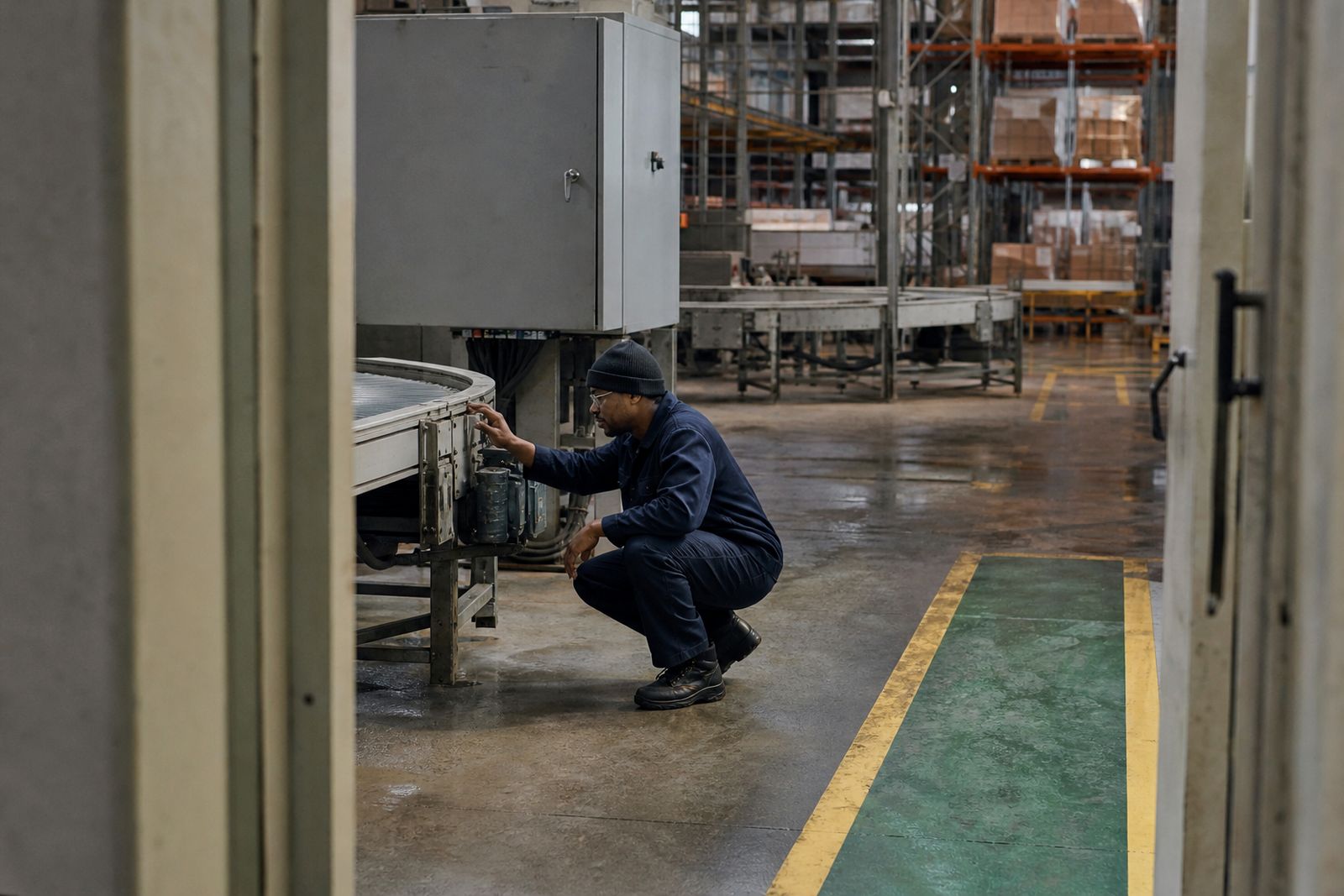
Clear concrete is easiest to judge when it is described before pallets, bins or wash-down hoses are moved into the working zone. By describing one unobstructed part of the client’s operating area in words and simple measurements, you can pick up cracked screed, ponding near a drain, tyre scuffing on tight turns and the paths forklifts follow through the client’s loading routes.
For effective first site notes, aim for:
- Plant area named clearly in the description
- Single wide-area description made before equipment shifts
- Drain, joint or visible damage clearly identified in the note
- Description includes the date and operating shift
First site notes at a client plant
Notes taken before the working area is disturbed reveal floor condition, access paths and movement patterns.
An opening description should make both the observer’s position and the way that part of the plant runs easy to recognise. A dispatch lane, a wash area or a loading door calls for different doorways, drains and joint lines to be mentioned. Elements such as machine bases, existing markings and nearby openings anchor where the first wide area was described on site so later notes can be lined up to match it.
Early wide-floor notes recorded before cleaning teams start work or the client’s production stock moves for the day give the clearest understanding of existing damage. Surrounding cues such as doorways, machine bases, drains and established line markings described in the same section keep the worn or stained area in context. These labelled overviews let everyone see whether staining, cracking or edge wear existed before any new work began.
Key details for site notes
Wide, scene-setting notes help set context, with closer descriptions then used to show specific defects, joints, outlets or heavy traffic points. Each section of writing should make scale, surface condition and any constraints easy to judge. A simple size reference, such as measured distances to a ruler mark, boot length, pallet edge or drain grate, keeps the description clear.
When recording key details in site notes, check for:
- Wide-area description that explains the main working zone
- Focused paragraph about the primary defect
- Area contact person and site role written in notes
Lighting & surface effects in site notes
Glare at open roller doors, dim corners deep in the plant and shine off damp surfaces all make defects harder to see, so they should be mentioned directly in the notes. Where patch repairs blend into the surrounding concrete, pair one scene-setting description with a clear, close description centred on the damaged area.
Concrete colour and surface texture shift as moisture, dust and lighting change, so notes should say whether the surface looks dry, damp, dusty or glossy when judged on site. Some floors carry a light film of moisture that throws a glossy sheen across sound concrete and makes it appear contaminated at first glance. Others collect dust that flattens the contrast between faded markings and bare substrate, especially along busy aisles in the client’s warehouse or dispatch zone, and emergency-only lighting rarely shows joints, edges and drainage falls clearly, so the same areas should also be described under normal lighting.
Labelling first site notes in the field
Written labels that follow the client’s own bay, line or room naming, captured while your own floor walk is still recent, keep each described zone linked to later decisions on repair scope, coating system or line marking changes.
What our Plant Equipment customers say
Verified Google reviews



Written your first floor note?
Send the note with the area name and shift, and it can be read against our coating and repair ranges.
Start an enquiry