

Trial day planning
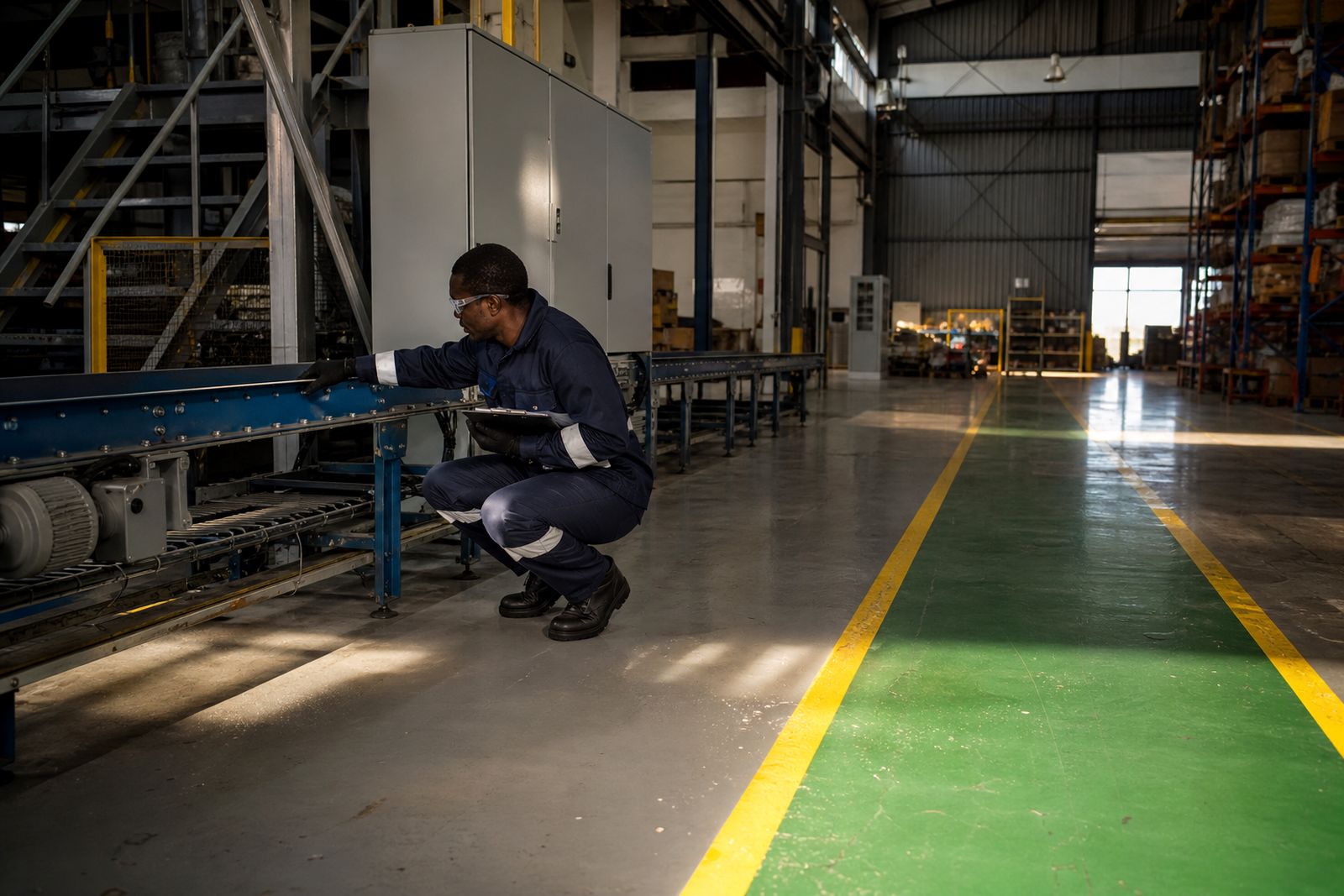
Plant-run floor trials let your crews watch how a proposed coating copes with forklifts, washdowns and everyday foot traffic on familiar routes.
Trial patch basics
By Khathu Phasha
Technical drawings and data sheets still miss what happens once forklifts brake, turn and idle on a coating, or when washdowns leave standing water and grit on the surface.
Panels laid directly on your production floor allow crews to watch how tyres scuff, squeegees track and wet boots mark the surface they already know. Working areas can show issues such as pooled wash water, dark tyre bands and detergent film that clings after cleaning.
During every trial patch, record the following details:
- Area isolated for the trial patch
- Location and condition summary for the trial patch on the floor
- Your internal reference that links to the test area setup
- Exact name of the contact person as shown on plant paperwork
Catalogue build-up, thickness and use descriptions give you specific terms to question on site, such as how the system handles door thresholds, ramp slopes or regular scrubbing in the trial panel area.
Preparing your plant for a floor trial
Trial areas inside a running plant work best once your own team has cleared how access, preparation work and any shift change walk-throughs will move around that patch. Bringing buyers, operators and your installers to one clearly marked piece of floor lets everyone judge colour, texture and cleaning effort while standing in the same spot. Choosing a location that already sees spills, washdowns and turning forklifts keeps the trial close to the traffic patterns that matter on your site.
Traffic mix during a trial, together with substrate soundness and the length of breaks between runs, shapes how the coating forms under load. Interactions between cleaning chemicals, tyre pressures, pallet-jack wheels and resin choice can change noise levels, underfoot grip, curing marks and the way any texture stands out in reflective light.
Initial written notes on the trial area, recorded before any grinding, masking or cleaning, make later scuffs, impact marks and stains easier to interpret. Placing a clearly marked card at the chosen work area with the date, product name and review zone helps visitors return to the same patch instead of confusing it with nearby repairs or paint lines.
Outcomes from a plant-run floor trial
A well-run trial leaves the team with one agreed test area, a short inspection list and a shared view of changes after traffic or cleaning. Returning to the same patch each time keeps comparisons straightforward, and relying on a single test panel keeps performance results directly comparable.
Outcomes from a floor trial include:
- One marked trial area for review
- Baseline record of the surface in its original, unprepared state at trial start
- Named person at the plant for follow-up queries
Plant features worth including in trials
Trial timing around courier and freight cut-offs, production windows and permit checks needs to be locked in before your own maintenance, projects or installation crews start work on the trial patch. Because trial patches sit inside live operations rather than empty shells, old repairs, paint lines, door thresholds and tight forklift turns should be flagged so planned work can fit around them instead of stopping normal loading.
Panels placed inside a working plant face forklift wheels, pallet jacks, washdowns and spill clean-ups long before the coating feels routine to the team using it. Shifts in lighting, extraction and cleaning water during the day all change how easily operators can spot spills, read line markings and judge glare on the slab. Written specifications and an appointment-only showroom viewing give a first picture of the finish, and some crews only decide after they have watched how the same system cleans and wears under their own forklifts and cleaning gear.
Briefing focus for your own trial teams and contractors
People involved in planning, preparing or assessing the trial area work more effectively when your written trial brief spells out which aisles, machines and doors the coating under trial must cope with, and what the floor section is expected to prove during any walk-throughs or inspections carried out by your management, safety officers or contractors.
What our Plant Equipment customers say
Verified Google reviews
Choosing a spot for a trial patch?
Describe the aisle or bay you have in mind and the traffic it carries, and we can suggest which system to trial there.
Start an enquiry