

Trial route plan
A mapped trial route lets trial runs, walk-throughs and product checks move through the plant without blocking day-to-day production aisles.
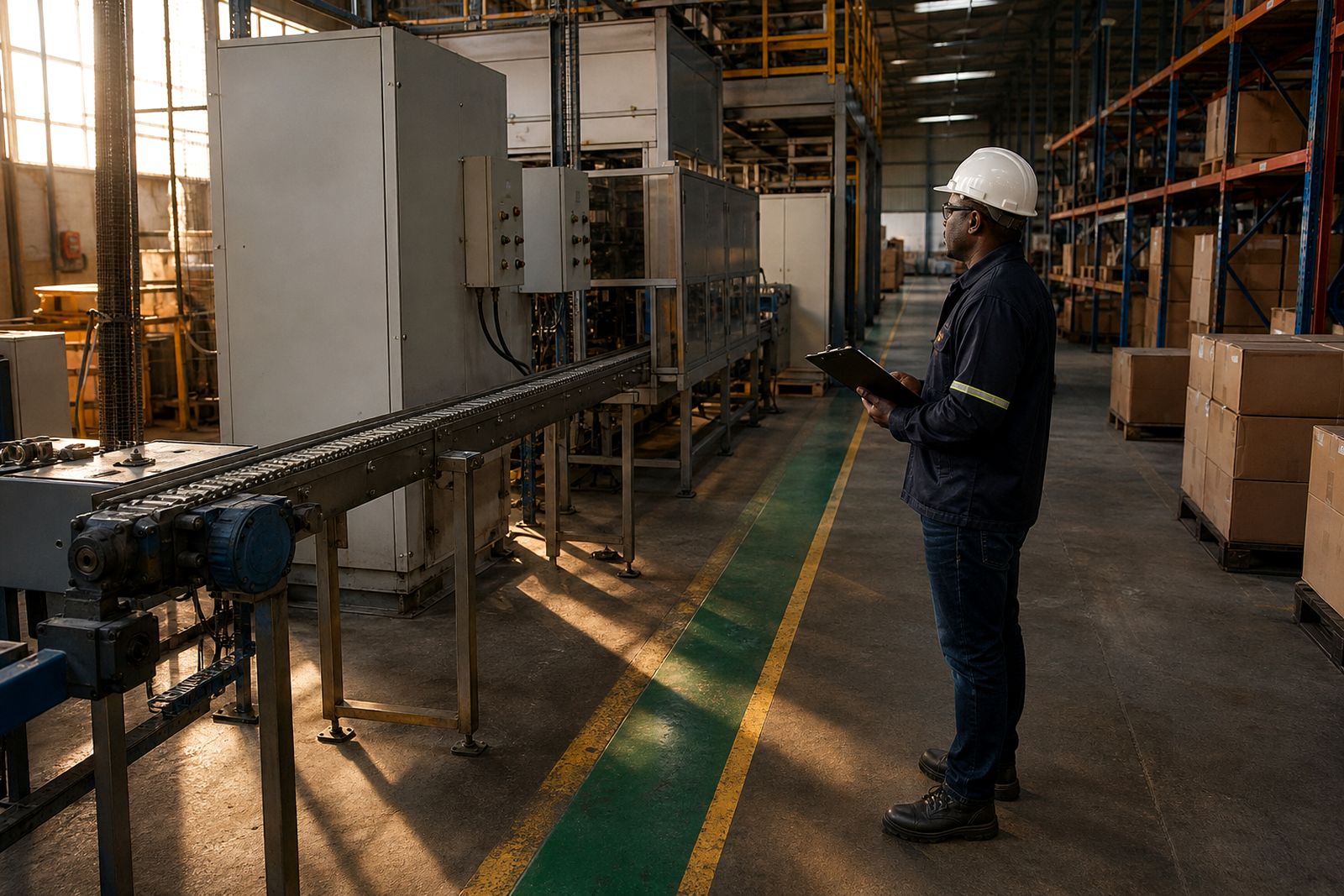
Marked trial route through production
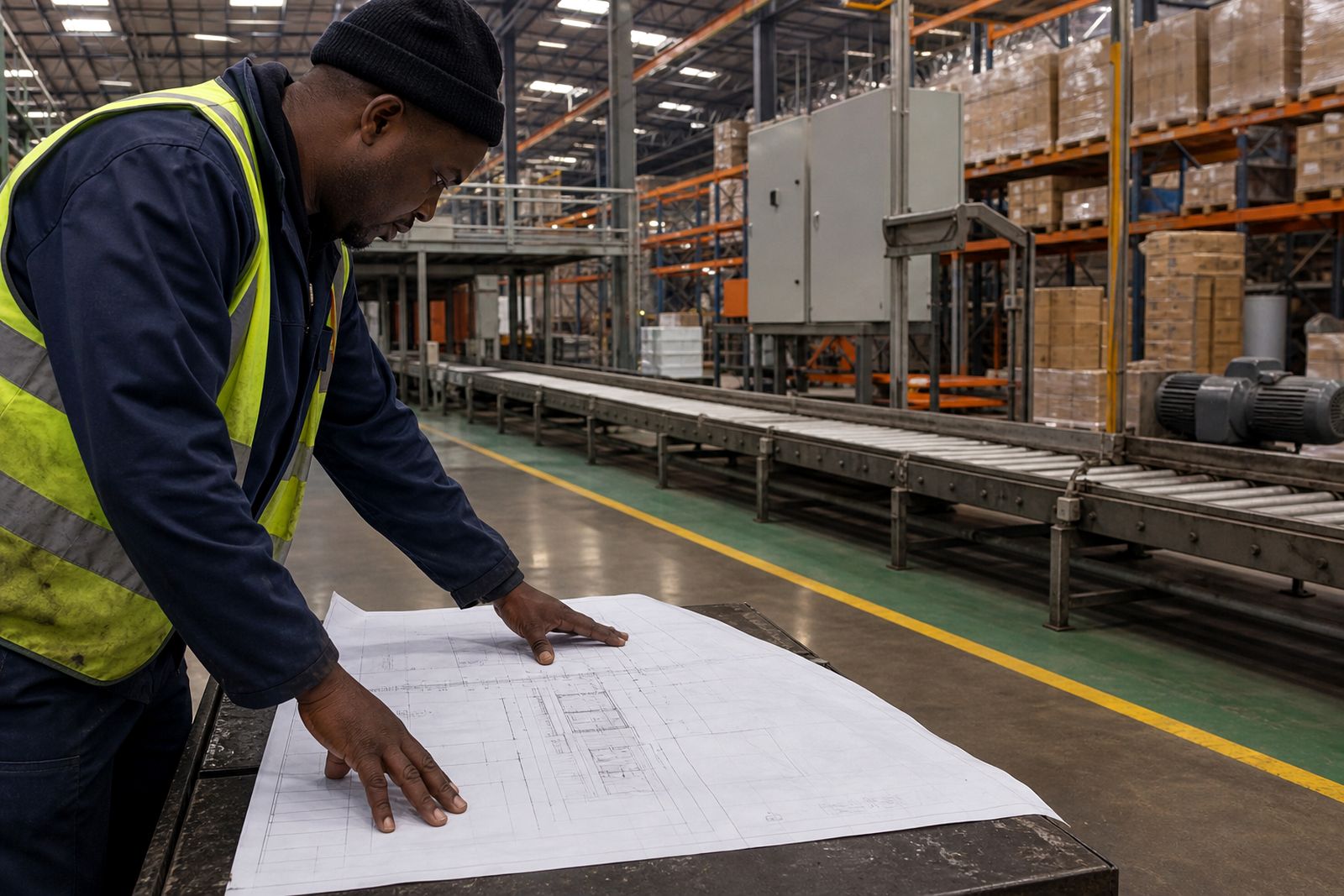
Working production areas can carry a marked trial route so your team can run walk-throughs, product checks or short in-plant trials while routine traffic carries on around them.
Trial routing inside an operating plant works best when it follows a short, easily supervised path for visitors or checks, steering clear of forklift lanes, packing points and machine loading zones. Along that path, mark the line, shift window and any fixed hazards such as wash-down areas, cable bridges, strip curtains or pallet stacks, and back this up with clear visual markers that show where to walk, pause or cross busy aisles.
Route notes can show the current line state, any temporary barriers and where approvals or checks will be viewed so marshals know what to expect. Match wording on handheld notes, wall maps and floor labels so teams describe the same path in the same way after sanitation or maintenance shutdowns or their own shift changes.
Contents of a trial route pack
Name the route, stopping points and checks tied to each section of the plant. Include simple direction markers, viewing positions, crossing rules and timing notes for a supervised walk-through by your team. Short, site-based instructions work better than a long list of options that are hard to apply during production.
A basic route pack records at least:
- Named route through active production areas
- Entry and stop points described clearly
Routing around plant conditions
Tight columns, busy aisles and storage pinch points push people and equipment into different traffic patterns. Spell out what may not move, which aisle crossings stay busy and where visitors are not allowed to stand during a trial run.
Loading doors, wash areas and hot process zones carry higher slip and visibility risks, so routes near these spaces need tighter control around wet patches, steam or glare. When the path passes these zones, make it clear where groups must slow, stop or follow a marshal, and flag any hot or wet processing areas that demand extra attention.
Making route information easy to share
A trial route plan sets out the floor layout, the timing and the path to follow in writing, so production can carry on around it.
Route details such as the plant’s name, the exact area under review and the reason for the route — product check, visitor walk-through or internal trial — need to be written down so everyone understands why that path exists. Note the expected group size and describe any restricted zones near forklifts, ovens, chillers or dispatch points so the route can be marked accurately and checked for safety risks.
What our Plant Equipment customers say
Verified Google reviews
Planning a walk-through route?
Tell us the group size and the stops on the route, and we can suggest the markers and signage to set it out.
Start an enquiry